
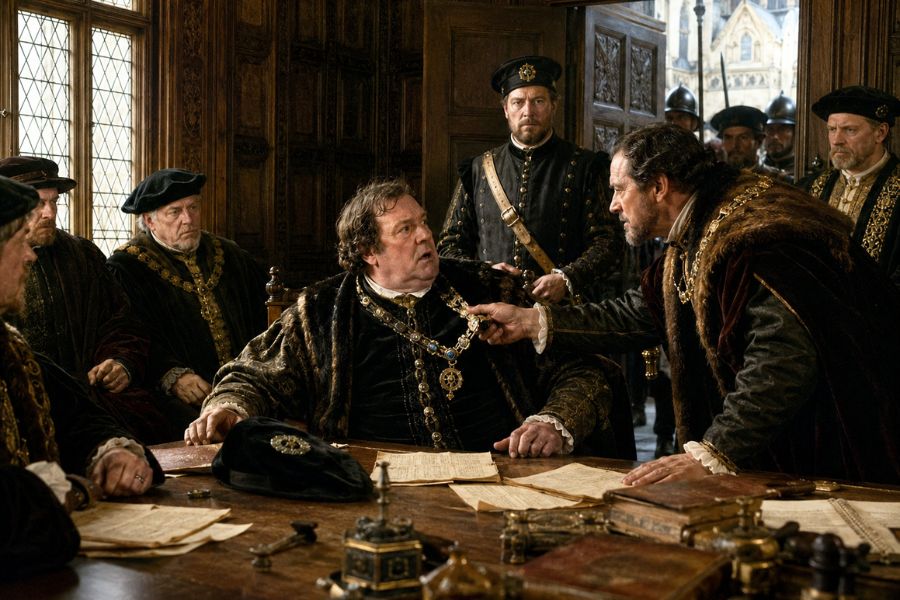
Imagine, if you will, being seated at the council chamber at Westminster on the 10th of June 1540. Thomas Cromwell takes his usual seat at the table, the most powerful man in England after the king himself. Earl of Essex for less than two months, Lord Privy Seal, and the man who had rebuilt the English church and emptied the monasteries.
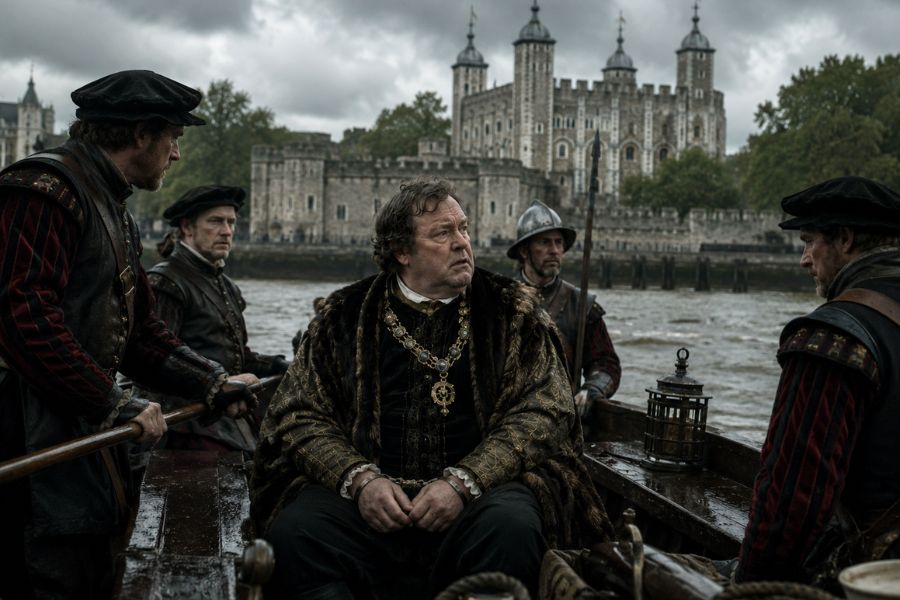
Then the door opens, the captain of the guard walks in, and Cromwell is told he is under arrest for treason. He throws his hat on the table in fury, and the Duke of Norfolk leans across and rips the badge of the Garter from his neck, in open contempt of the earldom Henry has just given him. Cromwell is then bundled onto a barge and taken to the Tower.
Table of Contents
Within seven weeks, he was dead.
His fall from grace was nothing short of spectacular. Cromwell fell from power so swiftly that it was astonishing. I mean, nobody who served close to Henry VIII was ever truly safe. But it’s the sheer speed of it.
A man who had run the country for the better part of a decade was arrested, condemned, and beheaded in the space of a single summer, with no trial and no chance to plead his case to the king he had served so loyally.
So what on earth happened? How did the great survivor of the Tudor court go from earl to corpse in fifty days?
The Man Who Had Everything to Lose
To understand the fall, you have to understand how high he’d climbed. Cromwell was a blacksmith’s son from Putney, born around 1485, with no land, no title, and no noble blood whatsoever.
He clawed his way up through Cardinal Wolsey’s household and into the king’s service through sheer ability, and once he had Henry’s ear, he never let go.
By the late 1530s, he was untouchable. He had masterminded the break with Rome, made Henry Supreme Head of the Church of England, and dissolved hundreds of monasteries, funneling their wealth and land straight into the royal treasury.
He’d also engineered the downfall of Anne Boleyn in 1536, building the case against her brick by brick and standing among the witnesses at her execution.
Then, in April 1540, Henry made him Earl of Essex. It looked like the summit. It was actually the edge of the cliff.
A Marriage That Doomed Him
Here’s where it all started to unravel, and it began, as so much did in Henry’s reign, with a wife.
By 1539, Henry was a widower again, isolated in Catholic Europe and in need of allies. Cromwell saw a chance to lock down a Protestant alliance with the German princes by marrying the king to Anne of Cleves, a duke’s sister from the Rhineland.
On paper, it was clever statecraft. In practice, it was the boldest gamble of his career, and it blew up in his face.
Henry agreed to the match on the strength of a flattering Holbein portrait, then met Anne in the flesh at Rochester on New Year’s Day 1540. The meeting was an unmitigated disaster. Henry was repulsed, his pride wounded, and he went through with the wedding only because backing out would have humiliated him before all of Europe.
He complained loudly to anyone who would listen that he could not bear her.
And whose idea had the whole thing been? Cromwell’s. The minister had personally tied the king to a marriage he loathed. To make it worse, by February 1540, the foreign threat that justified the Cleves alliance had melted away, so the marriage wasn’t even useful anymore. Cromwell had spent his entire career making himself indispensable to Henry. In one stroke, he’d made himself a liability instead.

Hooked on the Middle Ages? Get more stories like this one in your inbox.
The Enemies He Made on the Way Up
A clever man can survive one mistake. What Cromwell couldn’t survive was making that mistake with a fair few enemies waiting in the wings, knives already drawn.
His low birth had rankled the old nobility for years. Here was a tradesman’s son ordering dukes about, handing out monastery lands, and deciding who rose and who fell. Chief among those who loathed him was Thomas Howard, the 3rd Duke of Norfolk, the most senior nobleman in England and a staunchly conservative religious figure.
Norfolk had watched this upstart commoner dismantle the old church and outrank men whose families went back centuries. He’d had enough.
There was a religious dimension too. Cromwell was an evangelical, a genuine reformer who believed ordinary people should read the Bible in English. To the conservative faction at court, he was a dangerous heretic dragging England too far, too fast away from the old faith. When his Cleves marriage handed them an opening, they didn’t hesitate.

A King Growing Old, Sick, and Suspicious
None of it would have mattered without the man at the center of everything. And by 1540, Henry VIII was not the golden prince of his youth. He was nearing fifty, grossly overweight, and in near-constant pain from a leg ulcer that never healed after a jousting accident in 1536.
The pain made him irritable, erratic, and increasingly paranoid. This was a king who had already cast aside or killed wives and ministers on suspicion alone, and who was growing more arbitrary by the year.
Cromwell’s enemies understood their man perfectly. They didn’t need to prove anything. All they had to do was simply whisper in his ear.
So they whispered. They told Henry that Cromwell was a heretic, that he was protecting other heretics, and that he was plotting to force his religious vision on the realm against the king’s wishes.
There were even murmurs that the minister meant to marry the king’s daughter, Mary, and rebel. It was thin stuff, mostly fabricated. But it landed in the ear of a sick, suspicious old king, and that was all it took.

Catherine Howard and the Act of Attainder
While Henry seethed over his Cleves marriage, his wandering eye had already settled on a lively young woman at court named Catherine Howard. She was barely nineteen.
She was English, charming, and she made the aging king feel young again. She was also Norfolk’s niece. The duke encouraged the match with everything he had, and it gave the conservative faction exactly what it needed: a route back to the king’s heart that ran straight through Cromwell’s ruin.
The mechanism for that ruin is what made the fall so brutally fast. Cromwell wasn’t given a trial. His enemies used an Act of Attainder, a parliamentary device that condemned a man to death without ever letting him defend himself in court.
Cromwell, the brilliant lawyer who had used the very same weapon against others, now found it turned on him. He wrote to Henry from the Tower, begging for “mercy, mercy, mercy.” None came.
The one thing keeping him alive was paperwork. Henry needed his minister’s testimony to finalize the annulment from Anne of Cleves, which came through on the 9th of July. After that, Cromwell had outlived his usefulness entirely.
The Scaffold on Tower Hill
On the 28th of July 1540, Thomas Cromwell was led out to Tower Hill. Crowds gathered to watch the fall of the man who had once decided life and death for half of England.
The end was grim, even by Tudor standards. The executioner, by one account a “ragged and butcherly” fellow, made a hash of it, and it took several blows of the axe to sever his head. His remains were carried back inside the walls and buried in the Chapel of St Peter ad Vincula, the little church at the Tower of London where Anne Boleyn already lay, and where so many of Henry’s victims ended up beneath the stone floor.
That very same day, miles away at Oatlands Palace, Henry VIII married Catherine Howard. Norfolk’s faction had won. The wedding and the beheading on a single afternoon tell you everything about whose star was rising and whose had set.
Why Thomas Cromwell’s Fall From Power Came So Fast
So why did it happen so quickly? Because everything that could go wrong for Cromwell went wrong at once.
The Cleves marriage stripped away his usefulness to a king who valued nothing else. His low birth and his reforming faith had made him a long list of enemies who were ready and waiting. The king was old, sick, and paranoid enough to believe the worst of him on the flimsiest evidence.
A rival’s pretty niece offered Henry a tempting reason to look the other way. And the Act of Attainder meant there was no trial to slow any of it down. Pull all those threads together, and a decade of power comes apart in seven weeks.
The strangest twist of all came later. Within months, Henry was bemoaning the loss of his minister, complaining bitterly that his councilors had tricked him into killing “the most faithful servant he ever had.”
I’m inclined to believe he meant it. He never found another servant who could do what Cromwell did, and his reign never quite recovered.
In the end, the man who had built the machinery of Tudor government and used it so ruthlessly against others was destroyed by the very tools he’d forged. He had taught the court how to take a great man down without a trial. They simply learned the lesson and turned it on the teacher.
FAQs On the Thomas Cromwell Fall From Power
Why did Thomas Cromwell fall from power so quickly?
Cromwell fell because several things went wrong at once. His Anne of Cleves marriage scheme collapsed and cost him Henry VIII’s favor, his low birth and reformist faith had made powerful enemies led by the Duke of Norfolk, and an aging, paranoid king believed the worst of him. An Act of Attainder then condemned him without a trial, so the whole thing was over in weeks.
Why was Thomas Cromwell executed?
Thomas Cromwell was executed on 28 July 1540 for treason and heresy. The charges were largely fabricated by his rivals, who accused him of protecting heretics and plotting against the king. In truth, his real crime was arranging Henry VIII’s hated marriage to Anne of Cleves and making too many enemies on his way to the top.
Did the Anne of Cleves marriage cause Cromwell’s downfall?
The Anne of Cleves marriage was the trigger, not the whole cause. Cromwell arranged the match in 1539 to secure a Protestant alliance, but Henry loathed his new bride and blamed his minister. By early 1540 the alliance wasn’t even needed anymore, so the marriage left Cromwell badly exposed. His enemies seized the moment to move against him.
Who was responsible for Thomas Cromwell’s downfall?
Thomas Howard, the 3rd Duke of Norfolk, led the faction that brought Cromwell down. Norfolk resented the low-born minister and his religious reforms, and he held a powerful card: his niece Catherine Howard, who had caught the king’s eye. Ultimately, though, it was Henry VIII himself who ordered the arrest and signed the death warrant.
Was Thomas Cromwell given a trial?
No, Thomas Cromwell never got a trial. He was condemned by an Act of Attainder, a parliamentary device that allowed a death sentence with no hearing and no chance to defend himself. Cromwell had used the very same weapon against others during his years in power. He wrote to Henry from the Tower begging for mercy, but none came.
How long did it take for Thomas Cromwell to fall from power?
Cromwell’s fall took just seven weeks. He was arrested at a council meeting on 10 June 1540 and beheaded on Tower Hill on 28 July 1540. Remarkably, he had been made Earl of Essex only that April, less than two months before his arrest, which shows how suddenly his fortunes collapsed.
Did Henry VIII regret executing Thomas Cromwell?
Yes, Henry VIII came to regret it within months. He complained that his councillors had tricked him with false accusations into killing “the most faithful servant he ever had.” He never found another minister who could run the kingdom as effectively, and many historians argue his reign never fully recovered from the loss.

Love a good medieval story?
Join our readers and get tales of kings, queens, castles and ordinary medieval lives straight to your inbox.

Kylie Lang is a nationally syndicated travel journalist with bylines on the Associated Press Wire & more, a medieval history writer, and the founder and lead author of Tales of the Middle Ages (talesofthemiddleages.com). She holds a BA (Honours) in History from the University of Kent and is a member of the British Guild of Travel Writers.
Related posts:
 Beyond Wolf Hall: The Dramatic Rise and Fall of Thomas Cromwell
 The Story of Anne of Cleves Henry VIII’s Reject Queen: Too Plain for a King, Too Clever for Court
 Six Women Who Dodged a Bullet, or Axe, by Not Marrying Henry VIII
 The Ones That Got Away. The Six Women Who Kept Their Heads, By Not Marrying Henry VIII