
On June 10, 1692, Bridget Bishop was hanged from a tree on Proctor’s Ledge in Salem, Massachusetts. She was the first of nineteen people executed for witchcraft that summer, plus an old farmer named Giles Corey, pressed to death under stones for refusing to enter a plea.
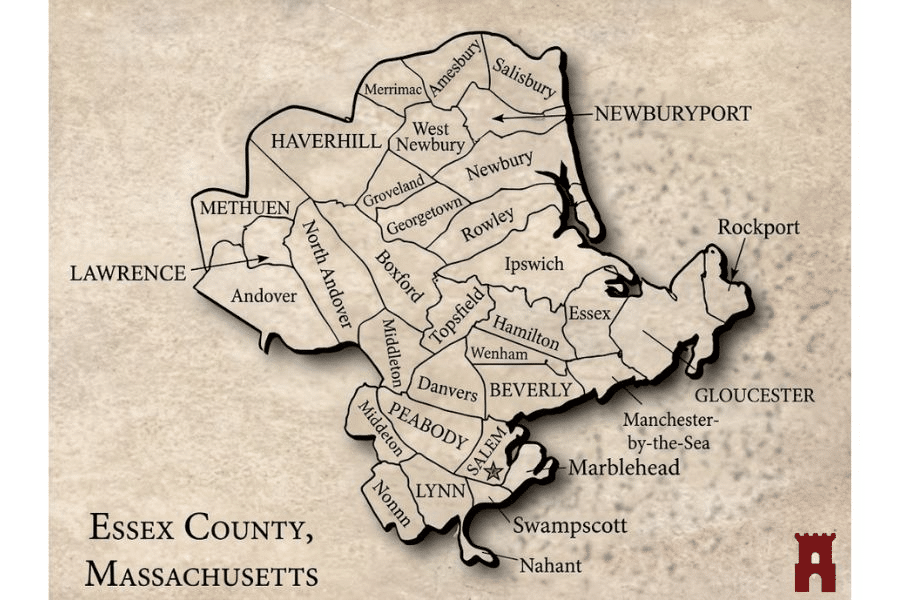
The court that condemned her was new. Governor William Phips had created it just a week earlier, on May 27, naming nine of the colony’s most respected men to sit in judgment. One of them was Nathaniel Saltonstall of Haverhill, a colonel in the militia, a Harvard graduate, the son and grandson of magistrates.
Table of Contents
After Bishop’s hanging, he went home and refused to come back. He sat through one execution, watched what the court was doing, and walked away. The Salem witch trials rolled on without him.

A Court Built in a Hurry
In the spring of 1692, Massachusetts was a colony without a functioning legal system. The old charter had been revoked by the Crown years earlier, and the new one, brought back from London by Increase Mather, had only just arrived. Governor Phips landed in Boston on May 14 to find the jails of Salem, Boston, and Ipswich already crammed with accused witches. Some had been there since February, and a few had died waiting.
Phips had no template for what to do. He’d been a sailor and a treasure hunter before he was a governor, and he was about to leave for Maine to fight the Wabanaki. So on May 27, he established a Court of Oyer and Terminer, an English term meaning ‘to hear and determine,’ and handed the problem to William Stoughton, his lieutenant governor, who would serve as chief justice.
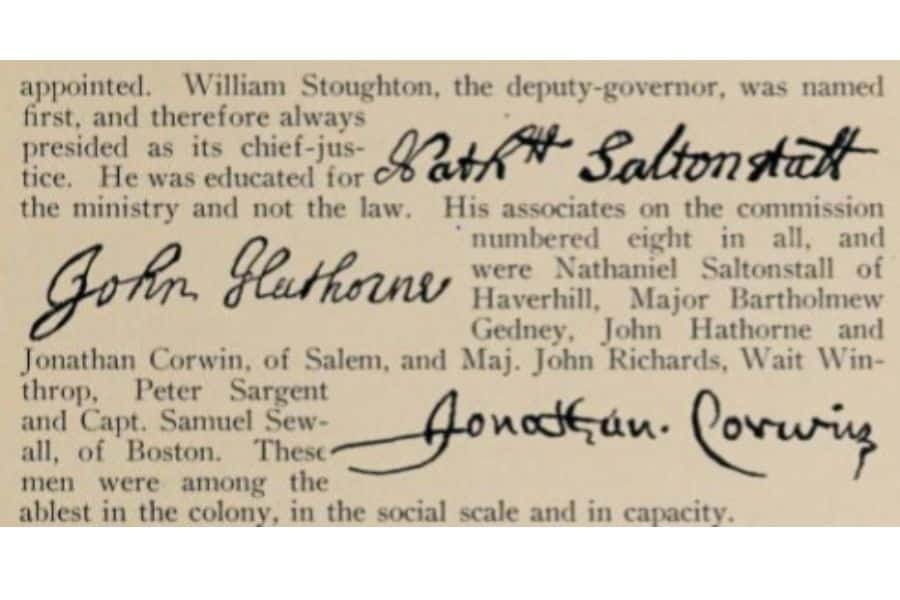
The other eight judges were drawn from the merchant and magistrate class of eastern Massachusetts. Samuel Sewall, who would later publish the only public apology any of them ever made. John Hathorne and Jonathan Corwin, who had already been examining suspects in Salem Village since March. Wait Still Winthrop, Bartholomew Gedney, Peter Sergeant, John Richards, and Saltonstall. They were men who had run towns, commanded regiments, and signed treaties. The colony trusted them to fix this.
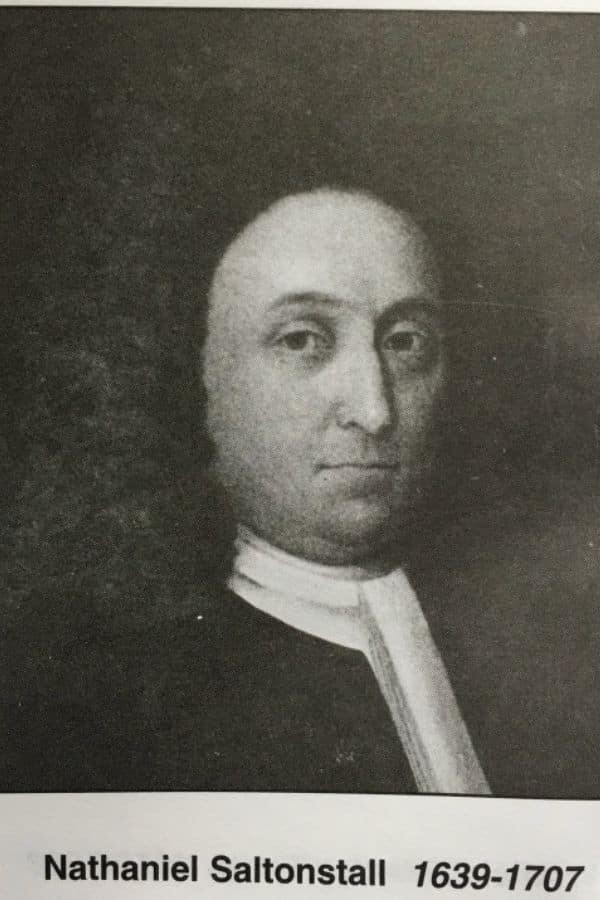
Who Nathaniel Saltonstall Was
Saltonstall was 53 in 1692, born in Ipswich to a family that had been in Massachusetts since the first wave of Puritan settlement. His grandfather, Sir Richard Saltonstall, had sailed with John Winthrop on the Arbella in 1630, and his father had been a magistrate before him. He’d graduated from Harvard in 1659, married Elizabeth Ward of Haverhill, and settled there to run the militia and serve on the Governor’s Council.
He wasn’t a radical. He’d signed his share of warrants, judged his share of cases. By the standards of late 17th-century New England, he was a perfectly conventional Puritan gentleman, the sort of man you’d expect to find on a bench like this one. Cotton Mather, writing later, called him a man of ‘a good understanding and a sober conversation.’
Interestingly, nothing in his career before 1692 suggests he was likely to break ranks. He’d been to Salem Village before, and known the Putnams and the Parrises by reputation. When Phips named him to the court, he accepted. He rode to Salem in late May or early June and took his seat.
Hooked on the Middle Ages? Get more stories like this one in your inbox.
What He Saw in That Courtroom
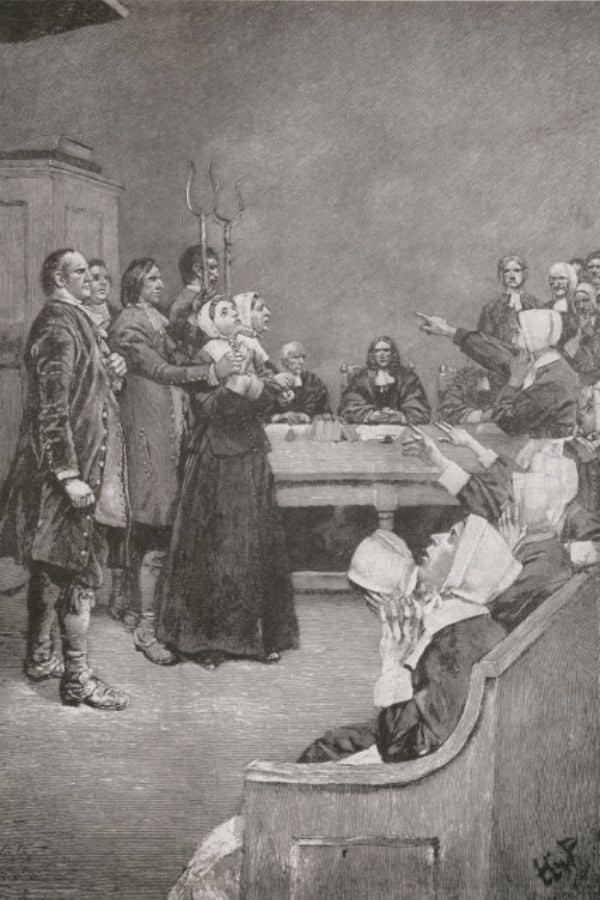
The case against Bridget Bishop took one day. She’d been accused of witchcraft once before, in 1680, and acquitted. This time, the evidence was a mix of old village grudges and the new thing, which the court called spectral evidence.
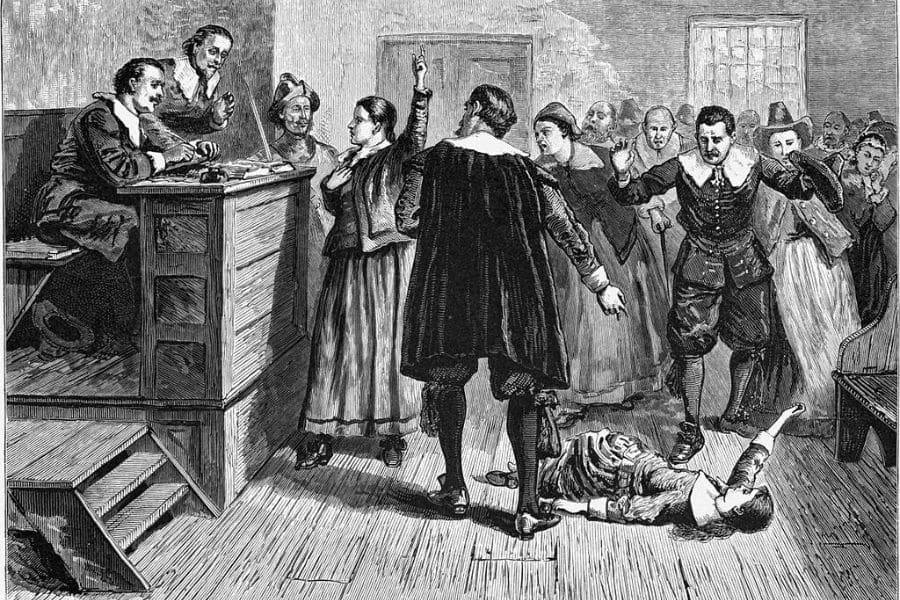
The Putnam girls and the other afflicted accusers testified that Bishop’s specter, an invisible double sent out by the Devil with her consent, had tormented them. They fell into fits in the courtroom when she looked at them. They said she’d appeared at their bedsides at night.
The physical evidence was the kind of thing that had circulated in English witch trials for a century. A workman claimed he’d found poppets, small cloth dolls stuck with pins, hidden in the walls of her old house. Neighbors testified that the animals had become sick after quarrels with her. A man swore her shape had appeared in his bedroom and pressed down on his chest while he slept.
Stoughton, presiding, instructed the jury that spectral evidence was admissible. The Devil, he said, could not take the shape of an innocent person without their consent. If Bishop’s specter had tormented the girls, Bishop herself was guilty. The jury convicted her, and she was hanged eight days later, on June 10. Saltonstall watched all of it, rode back to Haverhill, and sent word that he wouldn’t return.
The Resignation No One Recorded Properly
Here is where the historical record gets thin, as there was no formal resignation. All we have is a sentence in Thomas Brattle’s letter of October 8, 1692, the most important contemporary critique of the trials, which says that Saltonstall was very much dissatisfied with the proceedings of it, and hath expressed himself much against them. We have the fact that he simply stopped attending after the first session, and the consequences that followed, but that’s it.
In Boston, his absence was read correctly as a protest. Within weeks, rumors began circulating that Saltonstall himself was a witch. He was reportedly forced to defend his reputation through the summer and fall.
Cotton Mather wrote him a careful, anxious letter on September 20, 1692, urging him to be cautious about drinking, an oblique suggestion that the strain had pushed him toward the bottle. Whether that was true, a smear, or both, we can’t know for sure.
What we do know is that he never sat with the court again, and Phips replaced him with Jonathan Corwin, and the trials continued through the summer. On July 19, five women were hanged, including Rebecca Nurse, a 71-year-old grandmother whose acquittal the jury had reversed under pressure from Stoughton.
On August 19, five more, including the Reverend George Burroughs, who recited the Lord’s Prayer at the gallows, something witches were supposedly unable to do. The crowd was unsettled, but Cotton Mather, on horseback, reminded them that the Devil could appear as an angel of light, and the hanging proceeded.
Why One Refusal Wasn’t Enough
It’s tempting, reading this 300 years later with a cup of coffee in hand, to want Saltonstall’s gesture to have meant more than it did. To make him into the man who almost stopped Salem, but sadly, he didn’t.
The court hanged 14 more people after he left. The accusations spread beyond Salem Village into Andover, Gloucester, and even into Boston itself, where the wife of Governor Phips was eventually named.
That last accusation may have been what finally moved Phips to act. In October, after Increase Mather published ‘Cases of Conscience Concerning Evil Spirits,’ a careful theological argument that spectral evidence was unsafe because the Devil could indeed impersonate the innocent, Phips dissolved the Court of Oyer and Terminer.
A new Superior Court convened in January 1693 under different rules. Spectral evidence was effectively excluded. Of 56 cases tried, 3 were convicted, and Phips reprieved all of them.
Saltonstall’s refusal was one of several signals that pushed the colony’s leadership toward that reversal.
Thomas Brattle’s letter, Increase Mather’s treatise, the growing unease of ordinary ministers, the sheer accumulation of unlikely accusations. He wasn’t a lone conscience that stopped a machine, more of an early crack in the consensus, and the cracks eventually widened enough to make a difference.
What Happened to Him After
Saltonstall went back to Haverhill and to his militia command. He was returned to the Governor’s Council in 1693, which suggests the slander campaign against him had failed to stick, or at least had been outweighed by the colony’s shifting view of the trials.
He served as a judge in subsequent decades, including on the very Superior Court that replaced the Court of Oyer and Terminer. He died in 1707, aged 67, and was buried in Haverhill.
Samuel Sewall, his former colleague, stood up in Boston’s Old South Church on January 14, 1697, and asked the congregation to pray for forgiveness for his role in the trials, a public penance that has kept his name attached to the story ever since.
Whatever Saltonstall thought about Bridget Bishop’s hanging, he kept to himself, as he never spoke about it or wrote about it any document that has been found. So what made him ride away?
He’d been on the court for less than two weeks and had every professional reason to stay, the approval of Stoughton and Phips, the company of men like Sewall and Winthrop, the social weight of doing what was expected. But he chose to go home instead.

Love a good medieval story?
Join our readers and get tales of kings, queens, castles and ordinary medieval lives straight to your inbox.

Kylie Lang is a nationally syndicated travel journalist with bylines on the Associated Press Wire & more, a medieval history writer, and the founder and lead author of Tales of the Middle Ages (talesofthemiddleages.com). She holds a BA (Honours) in History from the University of Kent and is a member of the British Guild of Travel Writers.
Related posts:
 What Actually Happened at the Boston Massacre: The Trial, the Lawyer Who Defended the Soldiers, and Why John Adams Did It
 The Terrifying Origins of Europe’s Medieval Witch Trials
 Witchcraft in the Middle Ages: What Medieval People Really Believed About Witches
 7 Historical TV Shows That Take You Back in Time (Perfect For Those Missing Outlander and the Scottish Highlands in the 8th Century)