
On September 8, 1560, Amy Robsart Dudley was found dead at the bottom of a staircase. She was twenty-eight years old, married to Robert Dudley, and her death has fueled scandal and speculation for nearly five centuries. The cause was never proven. Was it an accident, suicide, or murder?
Her husband was no ordinary courtier. Robert Dudley stood closer to Elizabeth I than anyone else. Their bond was obvious, and whispers of marriage had already spread across Europe. Amy’s sudden death handed Elizabeth and Dudley exactly what they needed, at least in theory, but the timing was disastrous. Instead of clearing a path for them, it cast a shadow that neither could ever escape.
Table of Contents
The story of Amy Dudley opens a window onto the politics, ambition, and suspicion that ruled Tudor England. Every theory about her death is tied to the hunger for power, the risks of favor at court, and the way a single moment could ruin reputations forever.

Who Was Amy Dudley
Amy Robsart was born in 1532 in Norfolk, the only child of Sir John Robsart and Elizabeth Scott. Her father held estates in Syderstone and Stanfield, and her mother’s family brought further land and influence. That made Amy a valuable match in a world where marriages were about property as much as affection. She grew up in a Protestant household during years of religious upheaval, and her family’s position gave her connections at court.
At seventeen, Amy married Robert Dudley, son of John Dudley, Duke of Northumberland. Their wedding took place on June 4, 1550, at the royal palace of Sheen. King Edward VI himself attended, a sign of how closely the Dudleys were tied to the crown at the time.
It was a political union between two powerful families. Contemporary accounts hint at real affection between the young couple, unusual for a match arranged to secure land and alliances.
The Dudleys’ world collapsed just three years later. In 1553, Robert’s father tried to put Lady Jane Grey on the throne, a move that failed within days. Robert fought in support of his family and ended up in the Tower of London with the rest of them.
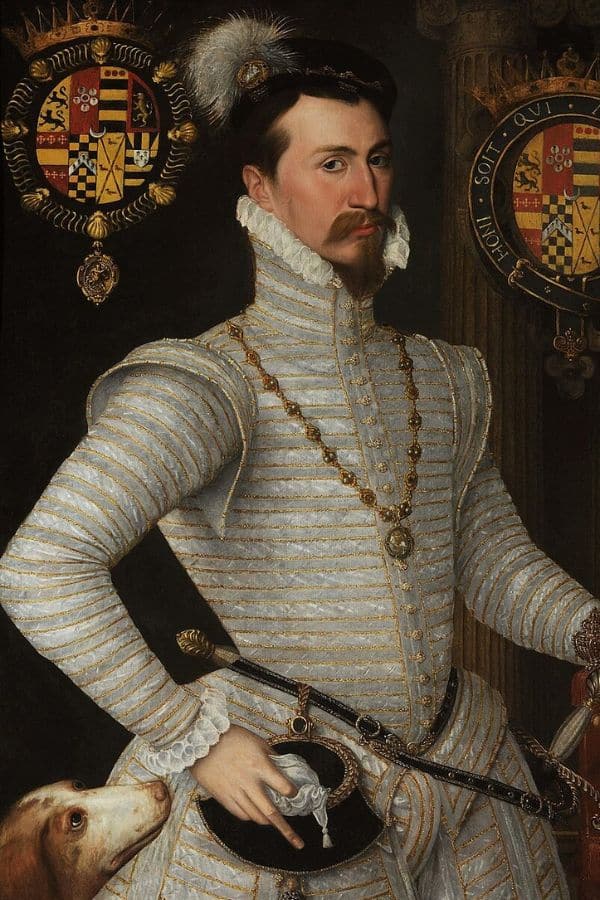
He fully expected to be executed. Amy visited him there, a rare glimpse of her loyalty during one of the darkest points in his life. Unlike his father and brother Guildford, Robert escaped the axe, but the rebellion left both Amy and Robert marked.
For a time after his release, Robert’s fortunes sank. He lived under suspicion, stripped of power, and dependent on others for support. Amy managed their estates and household through these lean years. Surviving records show her name in property dealings and accounts, proof that she was not hidden away but actively engaged in managing their affairs.
By 1558, when Elizabeth became queen, Robert’s fortunes shifted again. He returned to court and climbed fast, while Amy’s life grew quieter in the countryside. That divide between their worlds, Robert at the center of power, Amy running estates away from it, set the stage for the years that followed.
Hooked on the Middle Ages? Get more stories like this one in your inbox.
The Day at Cumnor Place
In September 1560, Robert Dudley was living under a spotlight that burned hotter than ever. Elizabeth had been queen for less than two years, and by then, everyone at court knew how close she and Dudley had grown. Foreign ambassadors wrote home about her fondness, her hours spent with him, her reluctance to let him out of her sight. Some even reported she was ready to set him above every other suitor.
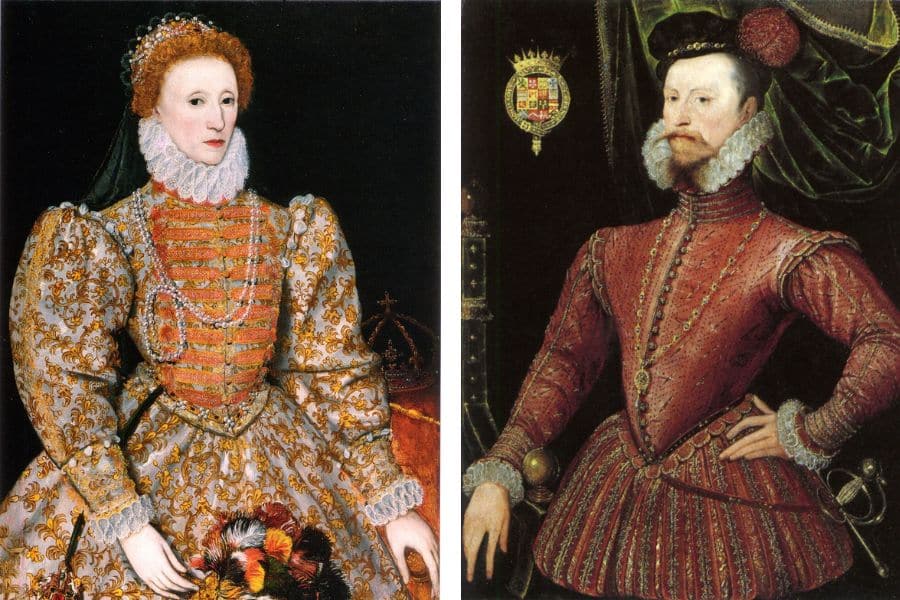
The problem was Dudley’s wife. Amy Dudley had not been seen at court since Elizabeth’s coronation. She lived apart, first moving between family houses, then taking up residence at Cumnor Place near Oxford, a large but aging property leased by one of Dudley’s associates, Sir Anthony Forster. Elizabeth could not marry a man with a living wife, and the gossip was relentless. Every diplomat in London watched Amy’s absence and guessed how long she might survive.
On the morning of Sunday, September 8, Amy seemed restless. Several reports say she ordered her servants to leave the house for the day. Some were told to go to the great Abingdon fair, a bustling event drawing crowds from across Oxfordshire. Others were sent to local churches.
When her gentlewoman, Mrs. Odingsells, said she would rather stay behind, Amy pressed her to leave as well. Her insistence stood out. Later, it became one of the details seized on by rumor-mongers who claimed she planned something terrible.
By afternoon, the house was almost empty. Only a few remained behind, and they kept to their rooms. At some point that day, Amy was found at the bottom of a short flight of stairs near her chamber. She had a broken neck and head injuries. No one saw her fall. There was no clear sign of a struggle, no note, and no explanation.
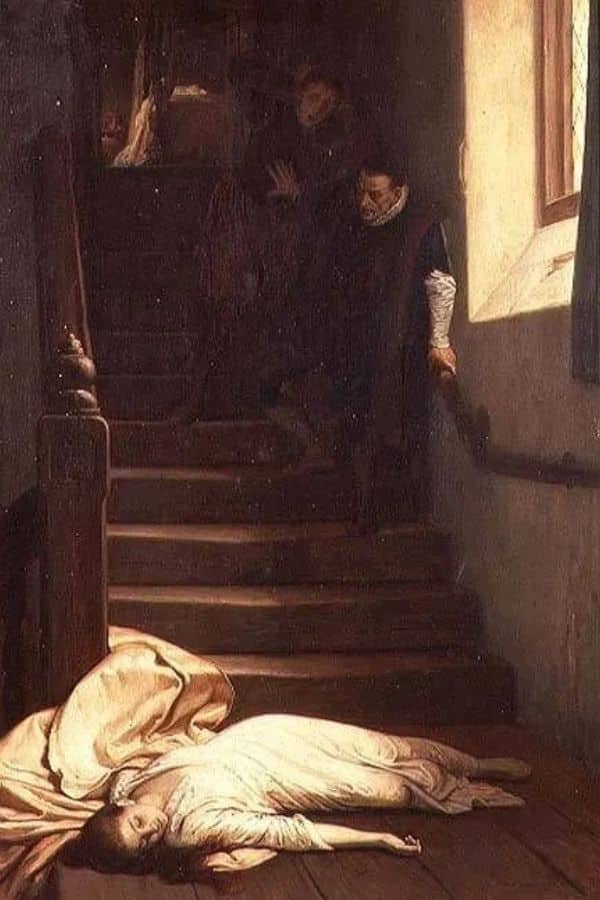
The shock spread quickly. By evening, the story was already moving through nearby taverns and churchyards, and by the next day, it reached Windsor, where Elizabeth and Dudley were staying. Dudley immediately dispatched his kinsman Thomas Blount to oversee events.
Blount arrived to find a house in disarray, servants frightened, and neighbors buzzing with speculation. Dudley demanded a coroner’s inquest and a jury of respected local men, desperate to prove he had nothing to hide.
The inquest began on September 10. Jurors inspected Amy’s body and the stairs where she fell. Their verdict was misfortune—an accident. But the gossip did not stop there. The circumstances, the absence of witnesses, and Dudley’s position at Elizabeth’s side made Amy’s death the spark for one of Tudor England’s greatest scandals.
Three Theories About Amy Dudley’s Death
The coroner’s jury in 1560 delivered a verdict of misfortune, the legal way of recording an accident. Yet from the moment news of Amy’s fall spread, few people accepted that simple answer. Ambassadors whispered to their masters, Dudley’s enemies seized on the scandal, and Elizabeth herself knew how the story could taint her.
Over time, three main theories took hold: accident, suicide, or murder. Each has evidence to support it, and each leaves questions that have never been settled.
Theory 1: Accident
The official inquest concluded that Amy Dudley’s death was an accident. The jury recorded that she fell down a short flight of stairs at Cumnor Place and broke her neck, with two wounds on her head. To modern readers, it sounds suspicious, but Tudor staircases were far more hazardous than the wide, even steps we know today. They were narrow, steep, and often uneven, built from wood that warped over time. A simple slip could be deadly.
Some historians point to Amy’s health as another factor. Letters suggest she may have been unwell in the months before her death, possibly with breast cancer or another illness that weakened her bones. If she were frail or dizzy, her chances of falling were higher.
The fact that she sent her servants away that day may also indicate that she wanted privacy, not that she planned her end. A quiet household meant no one could intervene if she felt sick or lost her footing.
The accident theory is straightforward, but it never satisfied the world of Tudor politics. Amy’s death came at the worst possible moment, just as rumors of Dudley’s closeness to Elizabeth reached their peak. A broken neck on a staircase might have been enough for the coroner, but it was never enough for Elizabeth’s enemies or for posterity.
Theory 2: Suicide
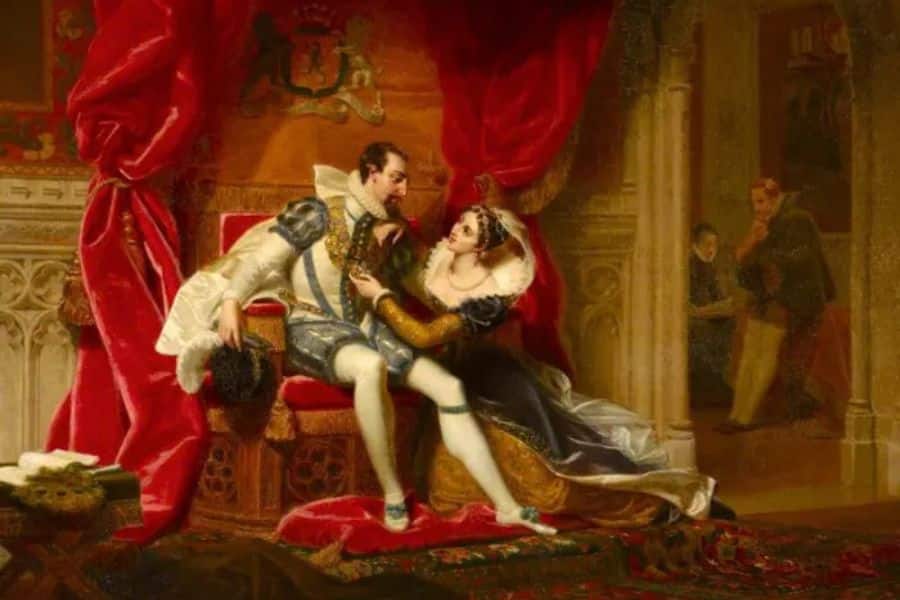
Another possibility is that Amy Dudley took her own life. Some of her contemporaries thought so, though few said it openly. Suicide in Tudor England carried a heavy stigma. It was a mortal sin, and the crown could seize the property of anyone who killed themselves. Families avoided the word and sought other explanations to protect reputations and estates.
Hints about Amy’s state of mind surfaced later in letters and ambassadorial reports. William Cecil noted in one of his memoranda that rumors of suicide circulated after her death. Amy had been living apart from her husband, aware of his closeness to Elizabeth. That separation alone may have left her feeling abandoned and humiliated. There are also references suggesting she was in poor health, which could have added to her despair.
The fact that Amy insisted her household leave Cumnor Place on the morning of September 8 lends weight to this theory. It looks deliberate, as though she did not want witnesses. If she were determined to end her life, ensuring the house was empty would have made it easier.
But the evidence is thin. No contemporary testimony records her intentions directly, and no note or statement survives. The stigma was so strong that few would have dared to commit such thoughts to paper. Suicide remains possible, but it rests more on circumstantial hints than on firm proof.
Theory 3: Murder
The most enduring theory is that Amy Dudley was murdered. Her death came at the precise moment when her husband’s closeness to Elizabeth I had reached its peak. To many, the timing was too convenient. With Amy gone, Dudley could, in theory, marry the queen. That possibility alone gave his enemies all the ammunition they needed.
Suspicion focused first on Dudley himself. Critics claimed he arranged Amy’s death to clear the path for marriage. Yet this view has problems. Ordering such a killing would have been reckless. Dudley was not a minor courtier but the queen’s favorite, under constant scrutiny. A scandal would destroy him, and he knew it. If anything, Amy’s death damaged his standing with Elizabeth rather than securing it.
Others have suggested that someone else engineered the crime. Dudley’s rivals on the council, fearful of his rise, could have seen Amy’s death as a chance to ruin him. A suspicious accident would taint his name without leaving proof of their hand.
Foreign ambassadors reported the story with relish, often spinning it to suit their politics. The Spanish envoy de Quadra even claimed Elizabeth herself told him she would marry Dudley if his wife were dead, a statement that poured fuel on the fire.
The problem with the murder theory is the lack of evidence. The inquest found no signs of a struggle, and the jurors returned an accident verdict. No servant reported hearing violence. If there was foul play, it left almost no trace. Yet in a world where rumor carried as much weight as fact, Amy’s death was enough to stain Dudley’s name for the rest of his life.
The Political Fallout
Amy Dudley’s death set off a storm that no verdict could calm. The coroner’s jury might have ruled her fall an accident, but in the court of public opinion, the damage was already done. Within days, ambassadors were writing home that the queen’s favorite was free to marry, and the gossip spread across Europe.
Elizabeth found herself trapped. She may have cared deeply for Robert Dudley, but she understood the weight of appearances. If she married him now, it would look like a union built on murder. To her council, her subjects, and foreign rulers, the death at Cumnor Place would always hover in the background. Instead of opening the way for marriage, Amy’s death slammed the door shut.
For Dudley he had lost his wife under suspicious circumstances, and at the same time, his ambitions for a royal marriage collapsed. He remained close to Elizabeth for decades, but the whisper that he had a hand in Amy’s death never left him. Rivals repeated it whenever his influence grew too strong, and Elizabeth herself knew the stain on his reputation could not be scrubbed away.
Amy’s fall at Cumnor Place became a turning point in the Elizabethan court, shaping how the queen balanced her personal feelings with the survival of her crown. Theories about what happened that day kept Dudley under suspicion, and the shadow of that staircase followed him to the end of his life.
Love a good medieval story?
Join our readers and get tales of kings, queens, castles and ordinary medieval lives straight to your inbox.

Kylie Lang is a nationally syndicated travel journalist with bylines on the Associated Press Wire & more, a medieval history writer, and the founder and lead author of Tales of the Middle Ages (talesofthemiddleages.com). She holds a BA (Honours) in History from the University of Kent and is a member of the British Guild of Travel Writers.