This is medieval history at its very best: the Mongolian legend of Genghis Khan and the stories that have been written about him. What’s true and what’s been invented is about to be revealed.

When most people hear the name Genghis Khan, they picture a fierce looking guy on horseback flattening entire cities without breaking a sweat. He’s the go-to reference for wild brutality, questionable genetics, and the odd pop culture cameo. But the man behind the name is a lot more complex than the comic book version.
Table of Contents
Genghis didn’t just pop out of the Mongolian steppe with a world domination plan tucked into his fur cloak. He clawed his way up from a rough start, got betrayed more times than we can count, and somehow turned a bunch of feuding tribes into the biggest land empire the world has ever seen.
Depending on who you ask, he’s either a military genius or a blood-soaked tyrant. So which is it? What’s fact and what’s total and utter fiction? We’re about to find out and take a proper look at the man who reshaped the world map, Genghis Khan, the human being, not the myth.
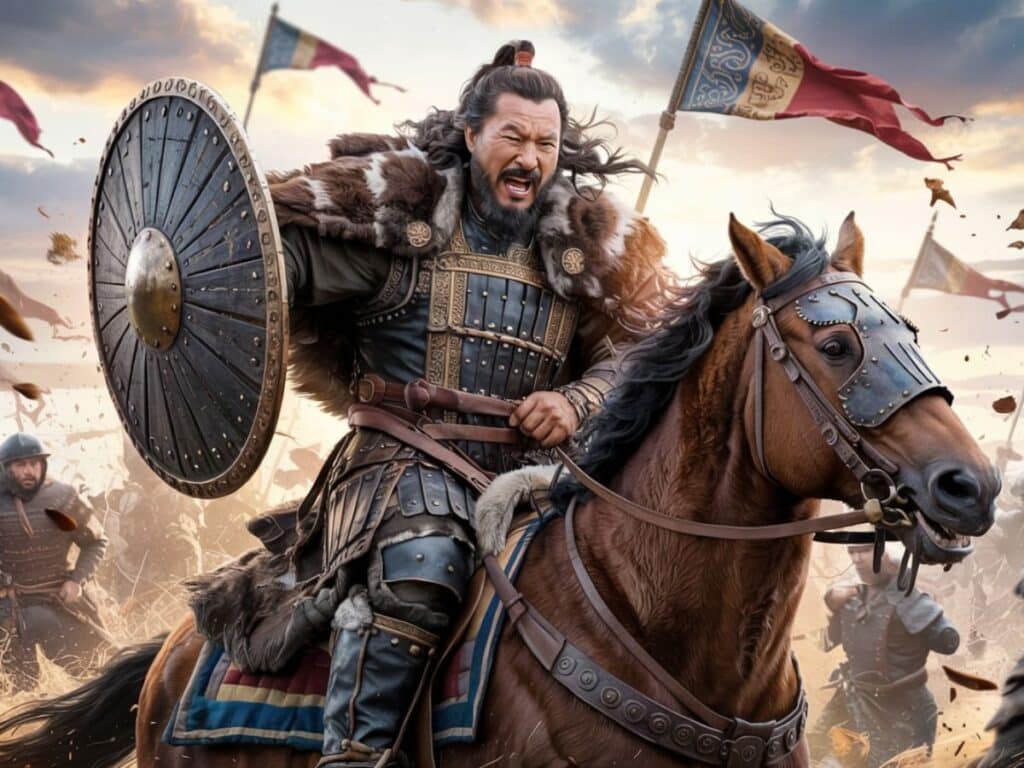
From Temüjin to Khan: A Boyhood on the Brutal Steppe
Before He Was Genghis
Long before the world knew him as Genghis Khan, he was just a boy growing up in one of the toughest places on Earth. His birth name was Temüjin. No palaces, no royal title, no hint of the power he’d one day have. Just a child born into a minor Mongol clan, surrounded by enemies and endless open land.
He would eventually become one of the most feared and successful leaders in history. But back then, he was one of many children scraping by in the cold, unforgiving landscape of the Central Asian steppe.
Life on the Steppe
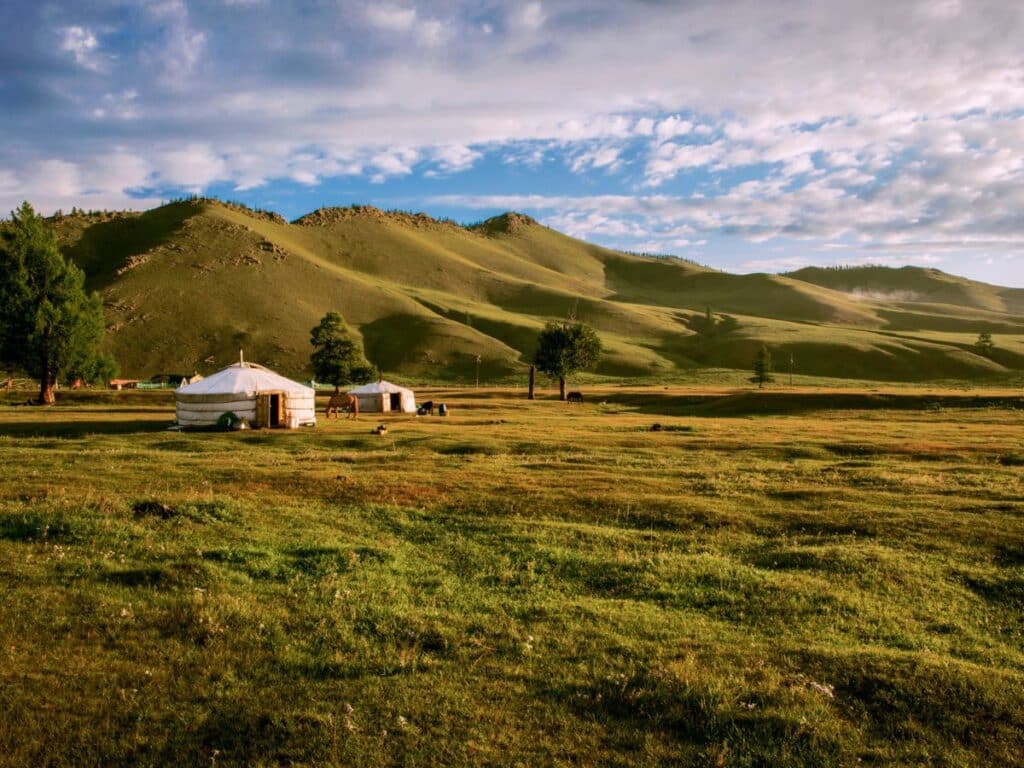
The Mongolian steppe was harsh, with endless grasslands where there was nowhere to hide, blistering summers, and winters that could freeze your bones. The wind never stopped blowing, and survival came down to speed, skill, and sheer determination.
The people of the steppe didn’t live in cities. They moved with their herds, setting up tents when the grazing was good and leaving as soon as it wasn’t. It was a world built around horses, honor, and quick decisions. If your tribe didn’t protect you, someone else would take everything you had. Sometimes, including your life.
Temüjin was born into this world, somewhere near the Onon River in northeastern Mongolia. The exact location is still unknown, which seems fitting. For someone who left such a massive mark on the world, his beginning remains a bit of a mystery.
A Brutal Start
Temüjin’s early life was defined by betrayal. His father, a clan leader, was poisoned by a rival group. Instead of stepping in to help the grieving family, the tribe turned their backs. Temüjin, his mother, and his siblings were cast out and left to survive on their own.
There were no riches, no warriors protecting them, just hunger and the constant threat of attack. His mother held the family together, foraging for food and keeping them alive through brutal winters. It wasn’t survival of the fittest and fiercest.
Lessons in Loyalty and Power
As he grew older, Temüjin learned quickly that loyalty could be a trap and strength had to be earned. He killed his half-brother in a fight over food. He was taken prisoner by a rival group and escaped with the help of a sympathetic jailer. Each twist pushed him further toward becoming the kind of leader who wouldn’t just survive, but rise.
What made him different was how he handled power. He didn’t rely on bloodlines or tradition. He started choosing allies based on trust and ability, not family ties. If you were strong, smart, and loyal, you had a place beside him.
So, before the armies, before the conquests, there was this. A boy shaped by betrayal, hunger, and the raw edge of the steppe. His childhood didn’t just prepare him for power. It demanded it.
Rise of the Khan: Uniting the Mongol Tribes and Conquering All in Sight
From Survivor to Strategist
By the time Temüjin hit adulthood, he had already proven himself in battle, gained loyal followers, and made a name for himself as someone you didn’t want to cross.
The Mongol tribes were a mess. Constant feuds, backstabbing alliances, and old grudges kept everyone in a permanent state of chaos. Temüjin wasn’t the first to dream of uniting them. He was just the one who pulled it off.
Breaking the Rules of the Steppe
Temüjin knew the tribal system had to go. The old way rewarded bloodlines and clans. He wanted loyalty to him, not someone’s great-grandfather. He promoted people based on skill, not status. That was unheard of at the time.
He also introduced discipline. His warriors followed orders. His punishments were strict but fair. He created a code of law that applied to everyone, no matter their background. If you betrayed him, it didn’t matter if you were family. You were out, or worse.
Slowly, tribe by tribe, battle by battle, he took control. Some pledged loyalty. Others had to be convinced with a little help from his army. By 1206, he stood before the remaining Mongol leaders at a gathering known as a kurultai. They gave him a new name. Genghis Khan. It meant universal ruler. And it came with serious ambition.
Conquest Begins
Once the tribes were united, Genghis turned his eyes outward. He wasn’t interested in just keeping the peace at home. He wanted to expand, which he knew wouldn’t be easy. He attacked with one of the most advanced military forces the world had ever seen.
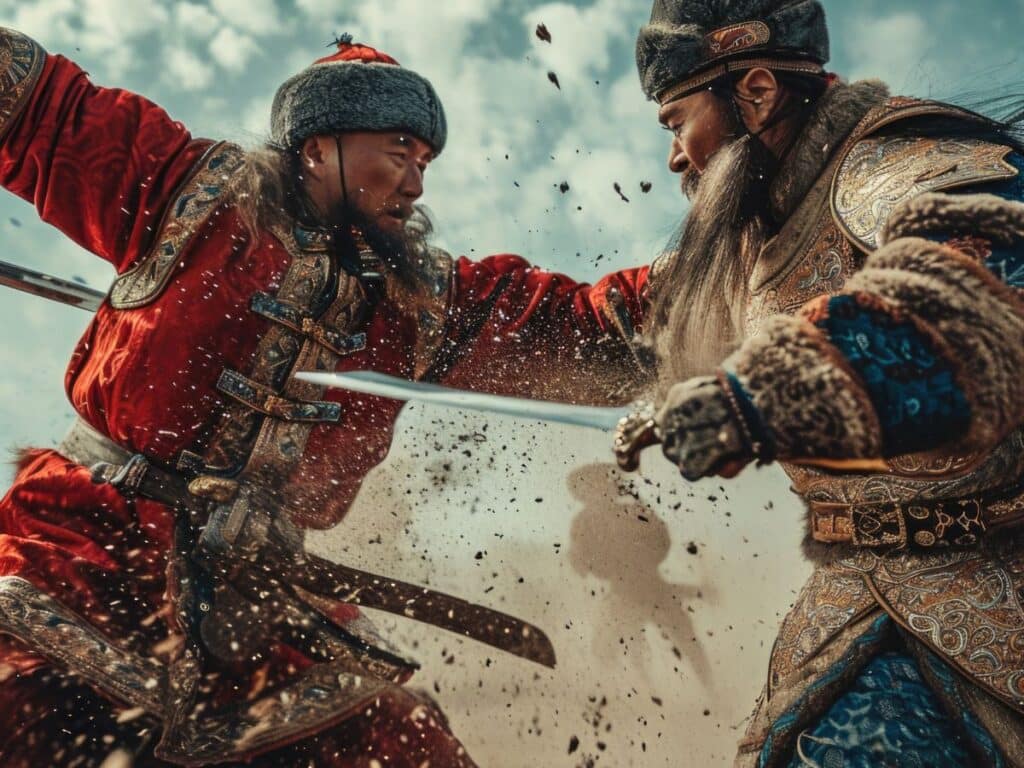
His army was fast, ruthless, and terrifyingly effective. Mongol horsemen could ride for days without stopping. They moved in tight formations, fired arrows while galloping, and used tactics that confused larger armies. Fake retreats, ambushes, surprise night attacks. They didn’t wait for a fair fight. They made their own rules and usually won.
Not Just Barbarians
There’s this image of Mongol warriors as wild barbarians sweeping across the map like a storm. The truth is a lot more impressive. Genghis ran his campaigns like a chess match. He used messengers, scouts, and spies to gather information. He studied his enemies. He planned. And when he struck, it was calculated.
He also knew how to send a message. When a ruler humiliated his ambassadors, Genghis wiped out cities. He made examples of those who resisted. But if a city surrendered, he often spared it. His brutality was real, but it was also a warning. Submit and live. Resist and regret it.
A Force the World Had Never Seen
Word had spread by the time the Mongols rolled into northern China and later into Central Asia. Genghis Khan was a storm that left disaster in its wake. Cities fell. Empires crumbled. His conquests weren’t random raids. They were part of a larger vision to bring the known world under one rule.
But it all started with uniting people who had spent generations trying to destroy each other. Turning chaos into a single, focused force. That was Genghis Khan’s first real victory. And once he proved he could pull that off, the rest of the world didn’t stand much of a chance.
Ruling the World: Law, Order, and the Surprising Side of Genghis’s Empire
From Warlord to Ruler
Once the blood and dust settled, Genghis Khan had a new problem. He wasn’t just a conqueror anymore. He was in charge of one of the largest empires the world had ever seen. Different languages, religions, and ways of life now sat under his banner. And somehow, he had to make it work.
He didn’t wing it. He built a system. Fast.
The Great Law
At the heart of his rule was a code called the Yassa. It was a mix of rules, punishments, and customs that kept his empire in check. Theft, betrayal, and cowardice in battle were all handled harshly. But the point wasn’t cruelty. It was consistency. Everyone was expected to follow the law, from the lowest soldier to Genghis’s own generals.
He also cracked down on corruption. Officials caught stealing were removed without ceremony. Sometimes permanently. His message was clear. It didn’t matter who you were. If you broke the rules, you paid the price.

A Place for Everyone (If You Played by the Rules)
One of the most surprising things about Genghis’s empire was its openness to outsiders. He welcomed talent from everywhere: Chinese engineers, Persian administrators, and even enemies who had fought against him and survived often found themselves offered a job if they were useful.
It didn’t matter where you came from. If you were loyal and good at what you did, there was room for you in the system.
And he didn’t stop at politics. Genghis made sure his people had a written script for the Mongolian language. He set up messengers on horseback to carry information across thousands of miles. It was how laws were enforced and how trade stayed safe. In a time when most rulers couldn’t communicate past their borders, Genghis had a working postal network.
Freedom of Religion
It might sound strange given his reputation, but Genghis Khan was big on religious freedom. He let his subjects worship how they wanted. He even gave tax breaks to religious leaders and scholars. Whether Buddhist, Muslim, Christian, or followed the old ways, you could live and work under Mongol rule without being forced to convert.
He believed that if people could pray in peace, they were less likely to rebel.
More Than a Destroyer
Yes, Genghis was ruthless. He burned cities to the ground. But once the fighting was done, he wanted peace. Roads were repaired. Trade routes opened. Merchants traveled safely through lands that had been war zones for centuries.
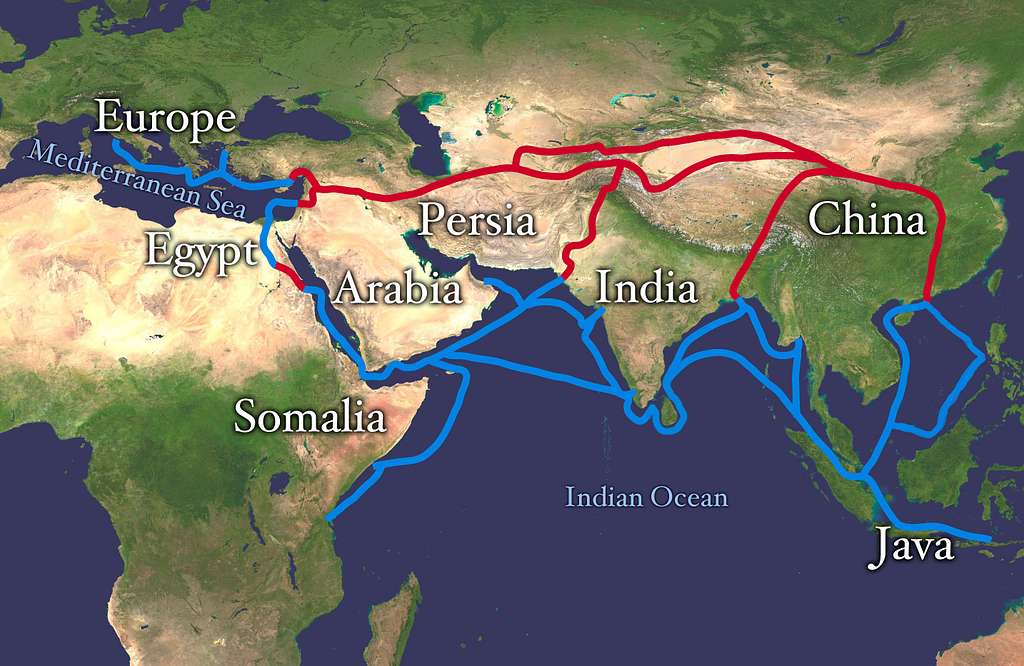
The Silk Road, once a risky path for traders, became one of the safest highways in the world under Mongol rule. Ideas moved along with goods. Cultures that had never met before now exchanged everything from recipes to science.
This side of the story usually gets left out. But it’s real. Genghis didn’t only tear the world down. In many places, he rebuilt it. His empire wasn’t built on chaos. It ran on order.
The End of an Era: Genghis Khan’s Mysterious Death and Hidden Tomb
Still Fighting in His Sixties
Genghis Khan didn’t slow down even with most of Asia under his control. In his sixties, when most people thought about handing over power or at least enjoying a break, he was still leading military campaigns. His final war was against the Tangut kingdom in western China. They had refused to send troops to help him during a previous battle, and Genghis wasn’t the kind of person to let that slide.
He launched a full-scale attack. The Tanguts didn’t stand a chance. But somewhere during that campaign, Genghis died. How, exactly, is still up for debate.
Death by Horse, Illness, or Something Stranger?
The official version says he fell off his horse and died from internal injuries. Others claim it was illness, possibly due to the campaign’s harsh conditions. But there are also other theories.
One story says he was wounded in battle and died later from infection. A more dramatic tale claims he was killed by a captured princess who hid a dagger and got her revenge. There’s no proof for that, but it still gets passed around. The truth is, no one really knows. And that’s part of what keeps the legend going.
The Vanishing Tomb
Genghis Khan’s burial is one of the greatest unsolved mysteries in history. According to tradition, his body was returned to Mongolia. Some say it was taken to a sacred mountain called Burkhan Khaldun. The people who buried him were supposedly killed to keep the location secret. Horses were said to have trampled the ground to erase any trace of the grave.
It sounds like a movie plot, but even today, no one has found his tomb. Not archaeologists. Not treasure hunters. Not high-tech teams with satellites and drones. It’s as if the man who conquered half the world managed to vanish without a trace.
A Legacy That Outlived Him
Genghis Khan died in 1227, but his empire didn’t fall apart. He had planned for this. His sons and grandsons were given parts of the empire to rule. They kept expanding, especially under his grandson Kublai Khan, who eventually took over all of China.
The Mongol Empire would become the largest contiguous empire in history. But Genghis built the foundation. His leadership style, laws, and military system held it together long after he was gone.

Legacy of Genghis Khan: The Good, the Bad, and the Unforgettable
A World Changed Forever
Genghis Khan left behind a world that looked completely different from the one he was born into. At its height, the Mongol Empire stretched from the Pacific Ocean to the edge of Europe. It connected cultures that had never even heard of each other before.
Trade exploded. Goods, ideas, and people moved across continents with a level of safety and speed that hadn’t been possible for centuries. Under Mongol rule, the Silk Road became the main highway of the medieval world, sharing science, technology, religion, and food between East and West. That kind of exchange helped shape the modern world.
Chinese innovations like paper and gunpowder spread west, while Islamic astronomy and medicine influenced the East. The Mongol Empire became a conduit for the cross-pollination of ideas that enriched all societies involved.
The Brutal Side
There’s no sugarcoating it. Genghis Khan’s wars were devastating. Entire cities were wiped off the map. Populations were reduced by millions. Some historians estimate that about one out of every ten people on the planet died as a result of the Mongol conquests.
Irrigation systems in the Middle East were destroyed and never fully recovered. Some regions took centuries to bounce back. The speed and scale of destruction were unlike anything people had seen before. And he knew exactly what he was doing. Terror was a weapon, and he used it to full effect.
A Mixed Reputation
How Genghis Khan is remembered depends on where you are. In Mongolia, he’s a national hero. His face is on the currency. The main airport in Ulaanbaatar is named after him. Kids learn about his achievements with pride. He’s credited with giving Mongolians their first real identity as a united people.
In other parts of the world, especially where his armies brought destruction, he’s remembered very differently. In Iran, for example, his name still carries weight as a symbol of devastation. He’s a villain from the history books in Russia and parts of Eastern Europe.
Then there are the modern pop culture takes, where he pops up as a meme, a movie character, or even a music video reference. He’s everywhere, but he’s rarely portrayed the same way twice.
The Genetic Echo
You’ve undoubtedly heard that Genghis Khan has millions of descendants alive today. It’s based on a genetic study that found a particular Y chromosome shared by around sixteen million men across Asia. The theory is that it started with one man in Mongolia about 800 years ago. Was it Genghis? Probably. But it could also have been one of his close relatives.
What’s not up for debate is that his bloodline spread far and wide. He had multiple wives and many children, and his sons and grandsons kept the pattern going. Whether or not he’s in your family tree, his impact on global genetics is very real.
More Than a Monster
Genghis Khan is a tough figure to pin down. He was a military genius who brought structure and stability to lands that had been fighting for centuries. He was also responsible for destruction on a massive scale. Some see him as a visionary leader. Others see a tyrant.
The truth is, he was both. He shaped history in ways that are still being felt today. He connected cultures, redefined power, and forced the world to reckon with the idea of empire on a scale that had never been seen before.
Genghis Khan in Pop Culture and Modern Discourse
From Mongol Warrior to Meme Material
For a guy born in the 12th century, Genghis Khan has had an impressively long run in pop culture. He shows up everywhere. He’s been played by John Wayne in a famously awful film, appeared in Bill & Ted’s Excellent Adventure swinging a baseball bat in a sporting goods store, and even starred in a slick historical drama in Mongol (2007), where he got the full brooding war hero treatment.
There’s a pop song with his name in the title. He’s a character in video games like Civilization and Age of Empires. You’ll even find him in cartoons, comic books, and the occasional Halloween costume. Some of it’s played for laughs, some of it’s vaguely accurate, but most of it turns him into a larger-than-life figure.

Internet Legend
Genghis Khan’s name gets tossed around online more than you might expect. Social media posts compare world leaders to him anytime someone suggests a harsh policy or aggressive move. And if you spend enough time scrolling, you’ll find someone blaming him for everything from environmental damage to global instability.
People use his name as shorthand. If someone’s described as “to the right of Genghis Khan,” it means they’re extreme. Not just conservative, but iron-fisted and ruthless.
Political Whiplash
Modern politics have also shaped his legacy. He was once written out of the national story in Mongolia during Soviet times. His name disappeared from schoolbooks, and his birthplace was left unmarked. Then, after Mongolia regained its independence, he came roaring back. Statues went up. His name appeared on everything from vodka to airports. He became a symbol of national pride almost overnight.
Meanwhile, in the West, writers and documentary makers have reexamined him and tried to clean up his image a bit. Books like Genghis Khan and the Making of the Modern World present him as a misunderstood reformer, a forward-thinking leader who valued religious freedom, meritocracy, and trade. That version of Genghis shows up in TED Talks, leadership seminars, and even the occasional business podcast. History’s ultimate disrupter.
A Name That Still Carries Weight
Whatever version of Genghis people are working with, he’s never been forgotten. You don’t have to know a single date or battle to recognize his name. That kind of staying power is rare.
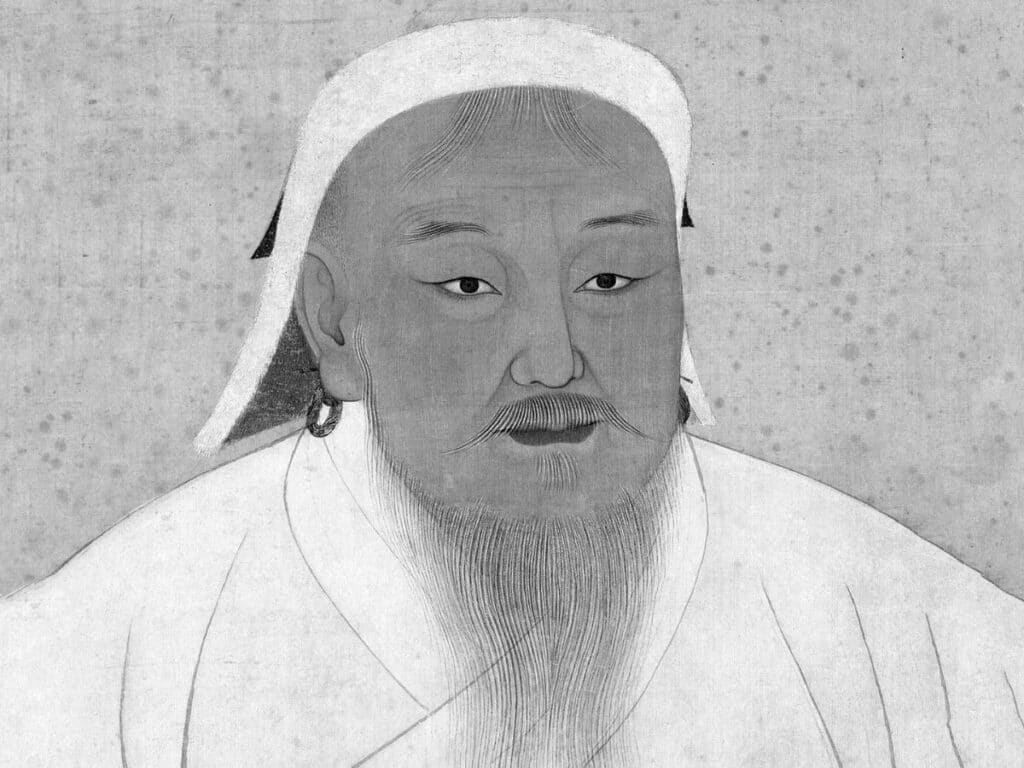
He’s been feared, erased, celebrated, joked about, and turned into a brand. Not bad for a man who lived eight hundred years ago and never posed for a portrait. Genghis Khan might be long gone, but he’s still everywhere.


Kylie Lang is a nationally syndicated travel journalist with bylines on the Associated Press Wire & more, a medieval history writer, and the founder and lead author of Tales of the Middle Ages (talesofthemiddleages.com). She holds a BA (Honours) in History from the University of Kent and is a member of the British Guild of Travel Writers.